Autistic children
Especially school-age children navigating unfamiliar or high-stimulus environments.
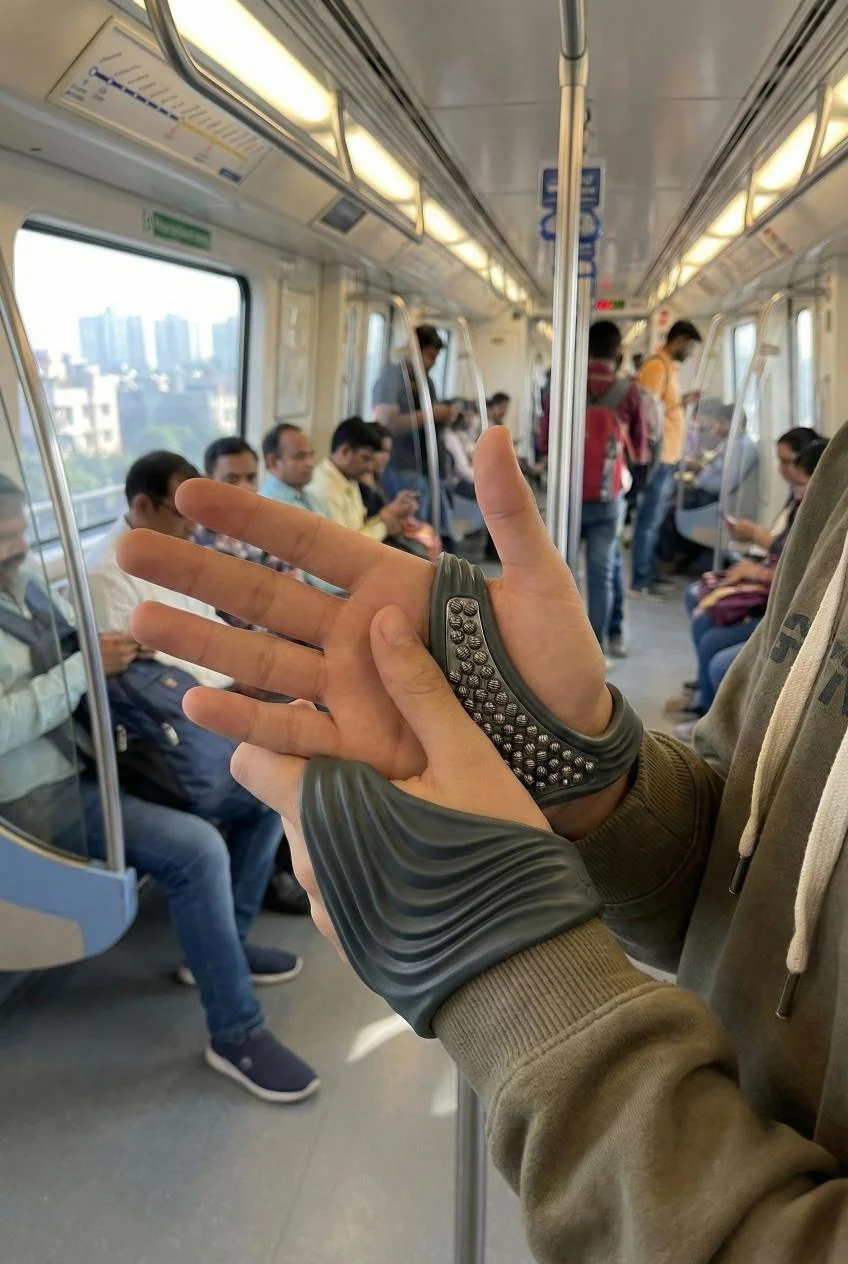
Wearable sensory regulation / Third-semester project 02
A steady point
in a loud world.
A discreet tactile-proprioceptive glove designed to offer a predictable sensory anchor during public overwhelm.
00 / Context
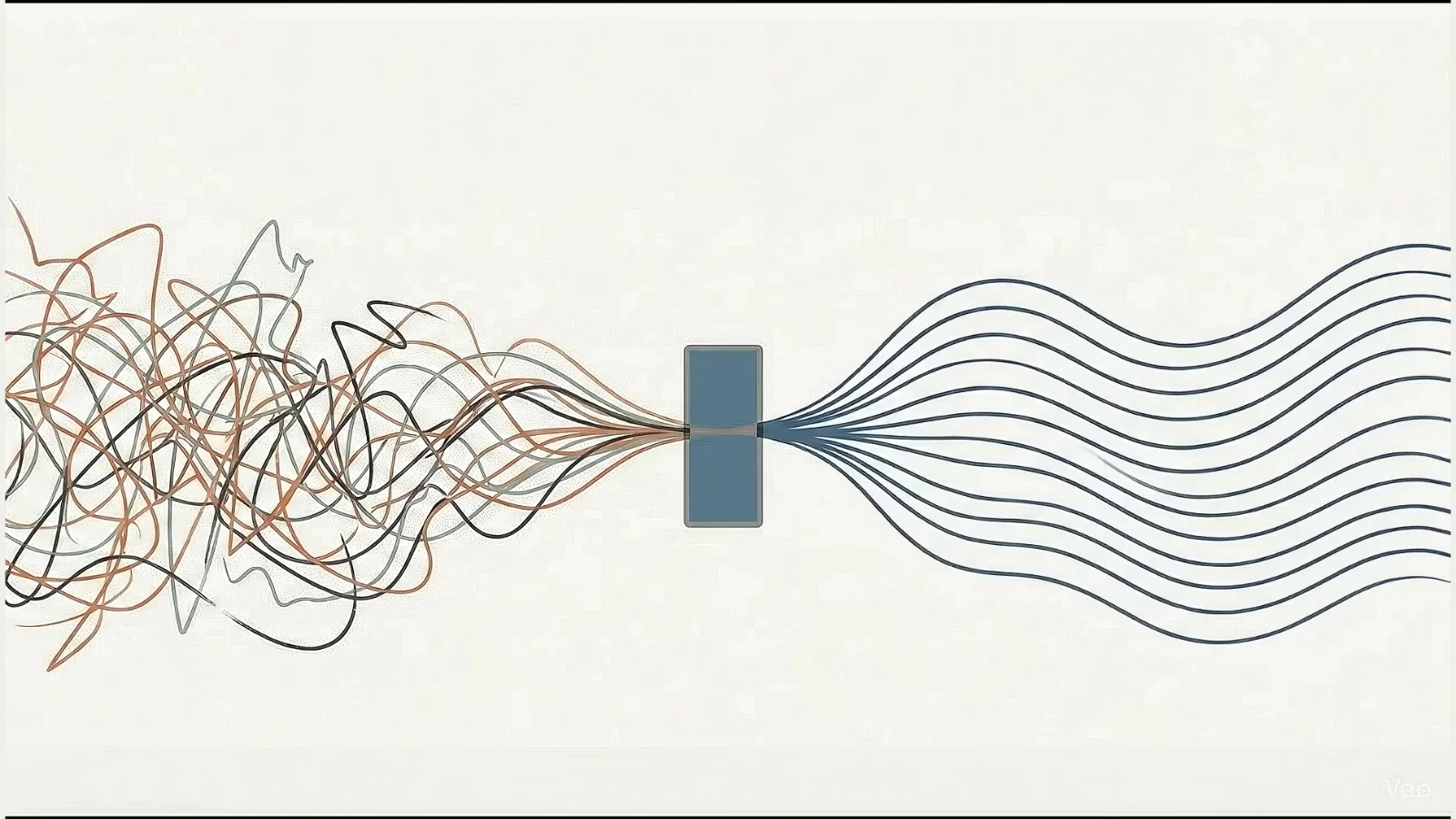
Metros, markets, schools and airports layer sound, movement, flickering light, physical contact and unpredictability. For some autistic people, the nervous system can struggle to filter that incoming information.
Regulation is not about erasing every stimulus. It is about offering the nervous system something strong, safe and predictable to return to.
01 / Research
Designing for neurodivergence
The project began with research into sensory processing across autism, ADHD, AuDHD, dyslexia, dyspraxia, sensory processing differences and auditory processing differences. A field visit to a specialist school in Delhi grounded that research in everyday realities.
The people around the experience
Especially school-age children navigating unfamiliar or high-stimulus environments.
People who recognise patterns, support regulation and understand individual sensory preferences.
People seeking portable, respectful support without drawing unwanted attention.
Sensory overload can look different for every person
The opportunity
The brief called for something wearable, discreet, portable and immediately available—without depending on a screen, a separate room or another person.
02 / Process
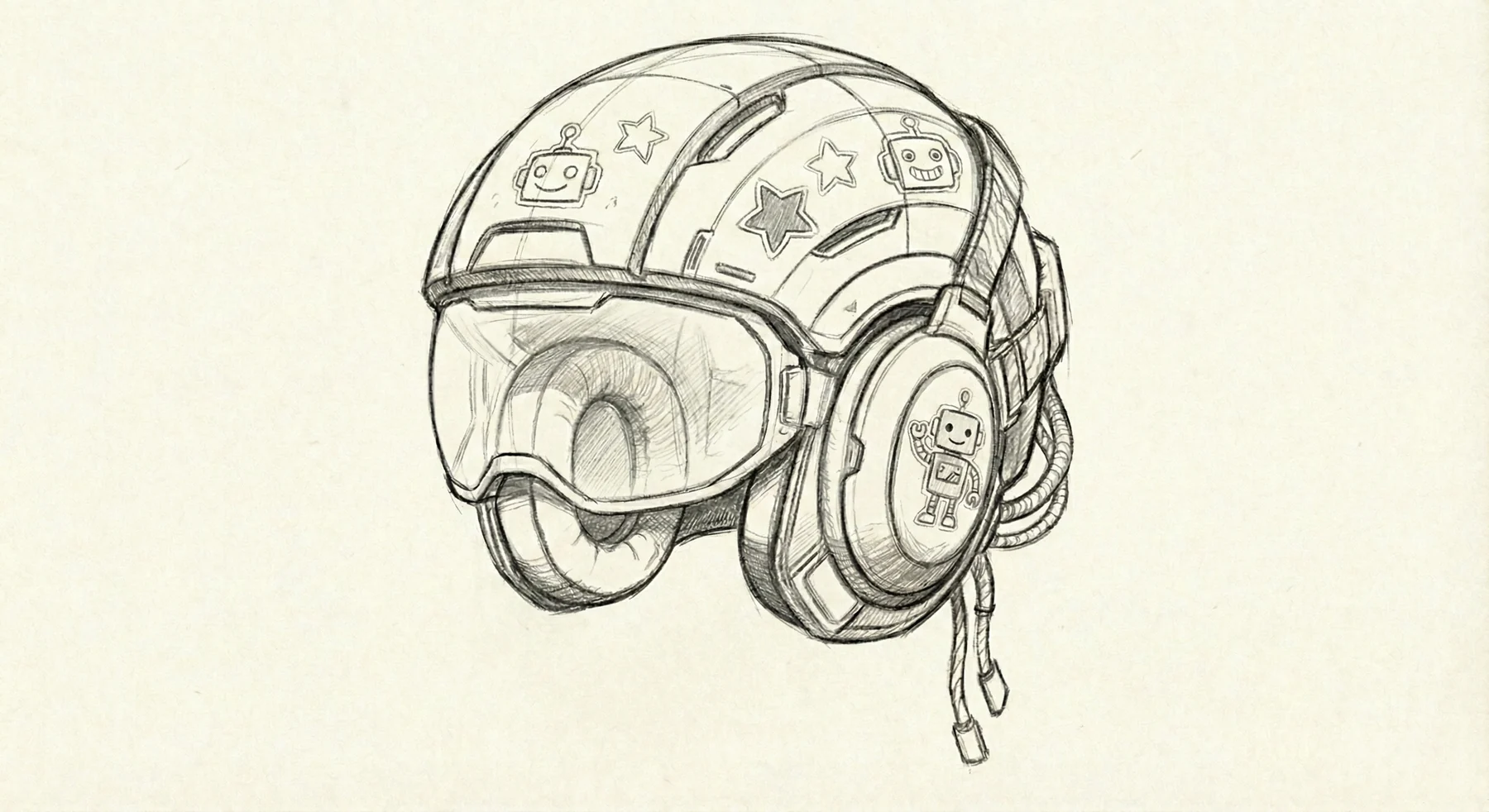
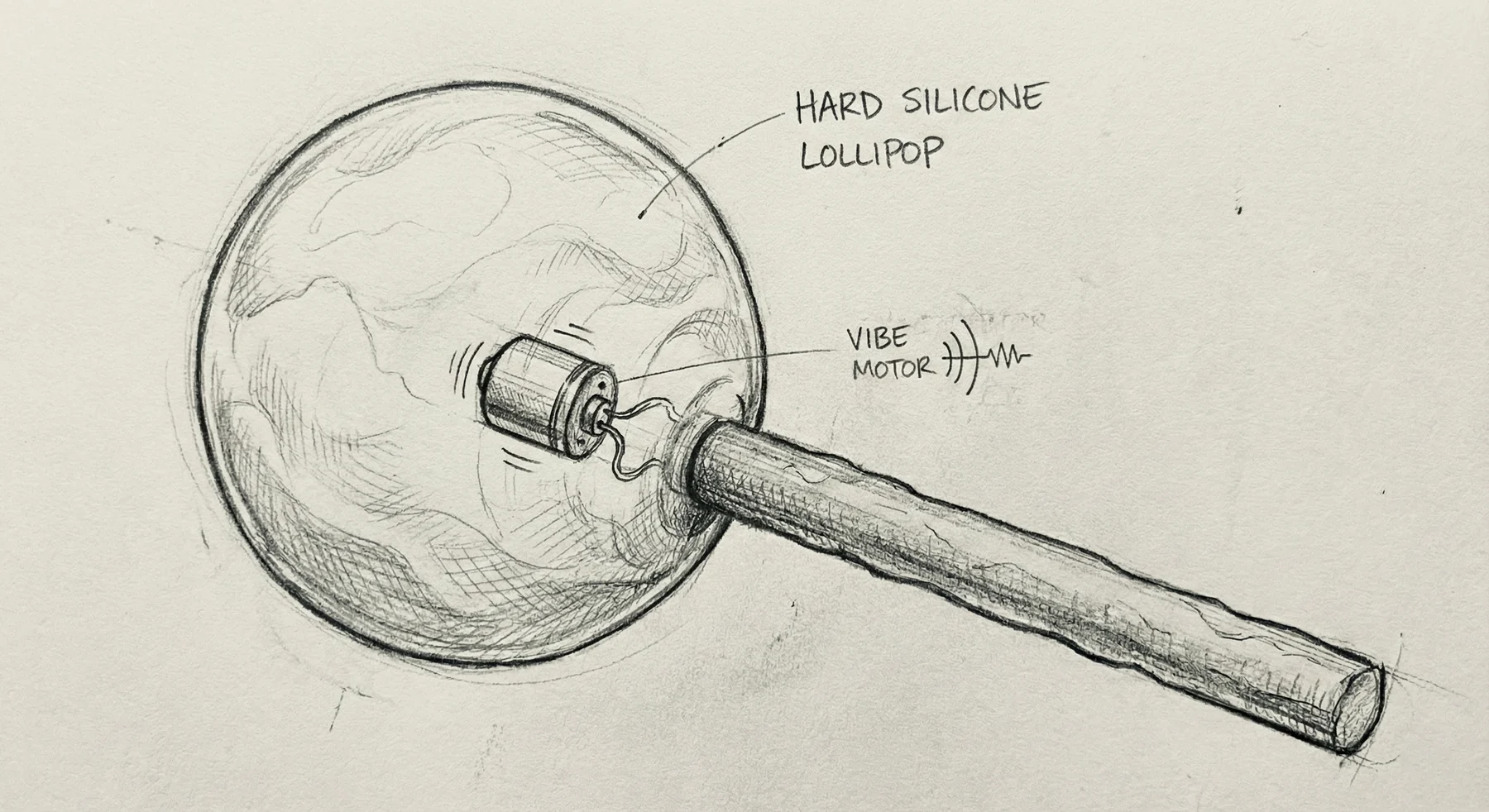
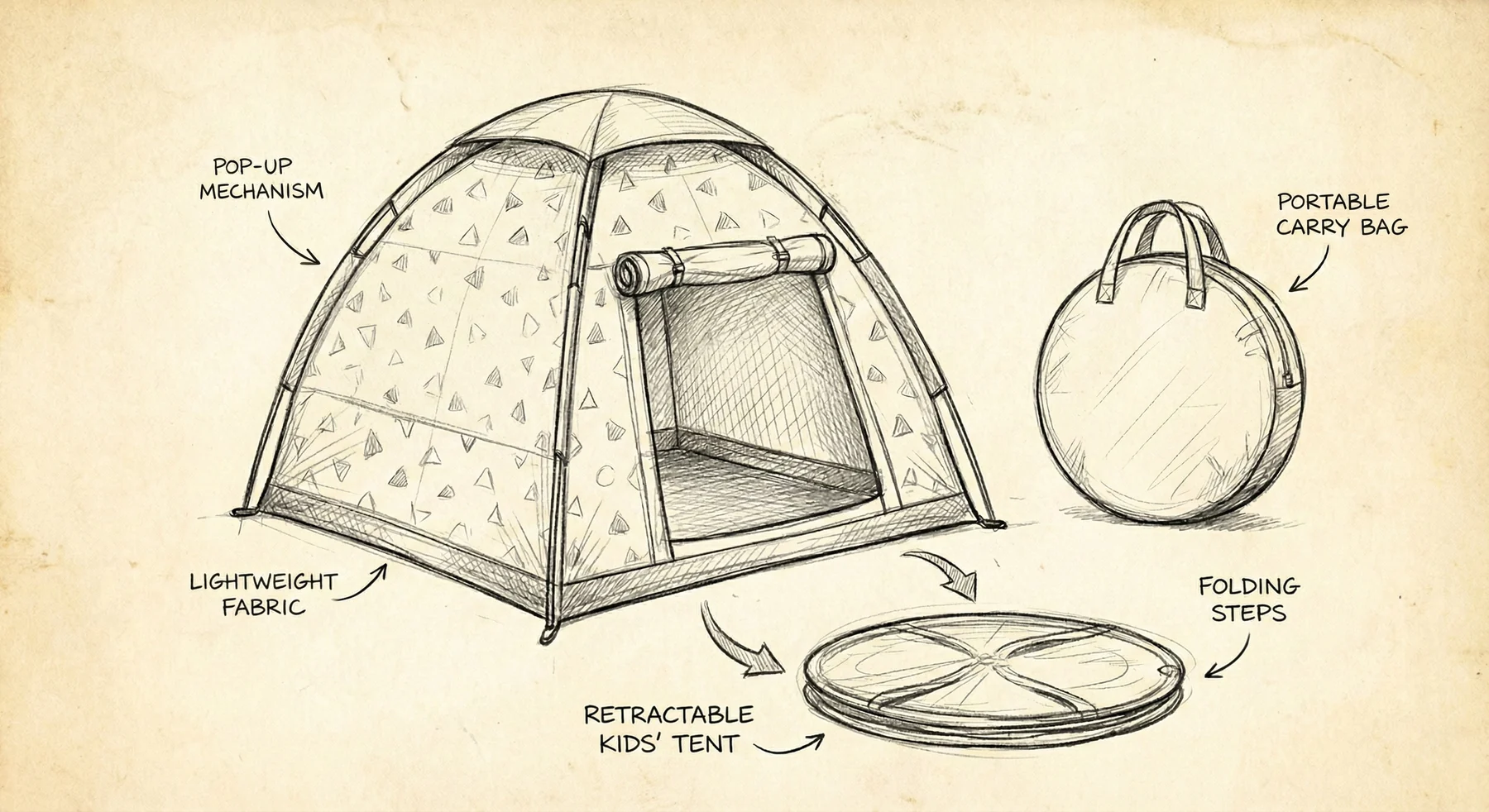
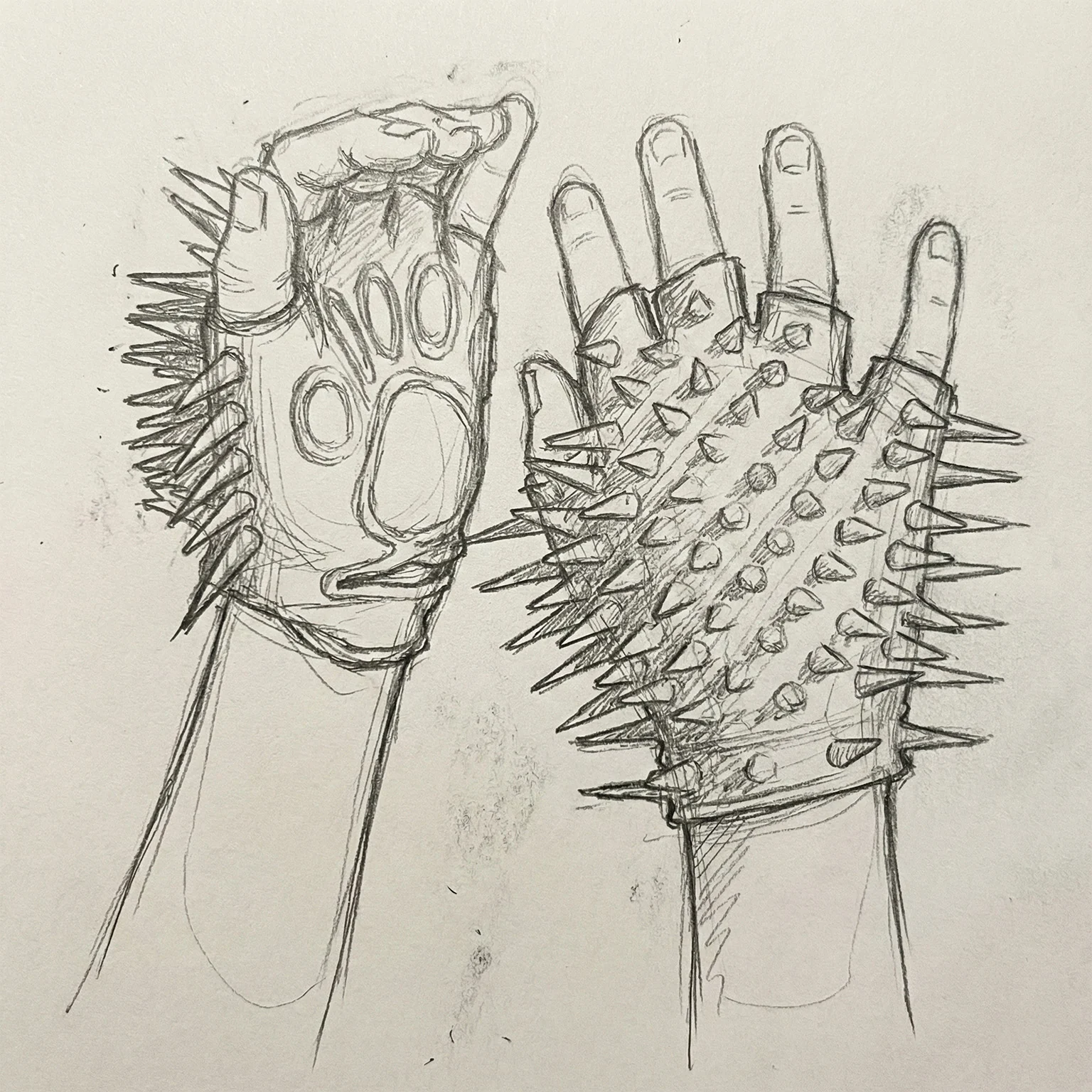
Early ideas explored narrowing vision, enclosing the head, creating a handheld sensory surface and building a temporary escape space. The glove became the turning point: support could travel with the body and stay within reach.
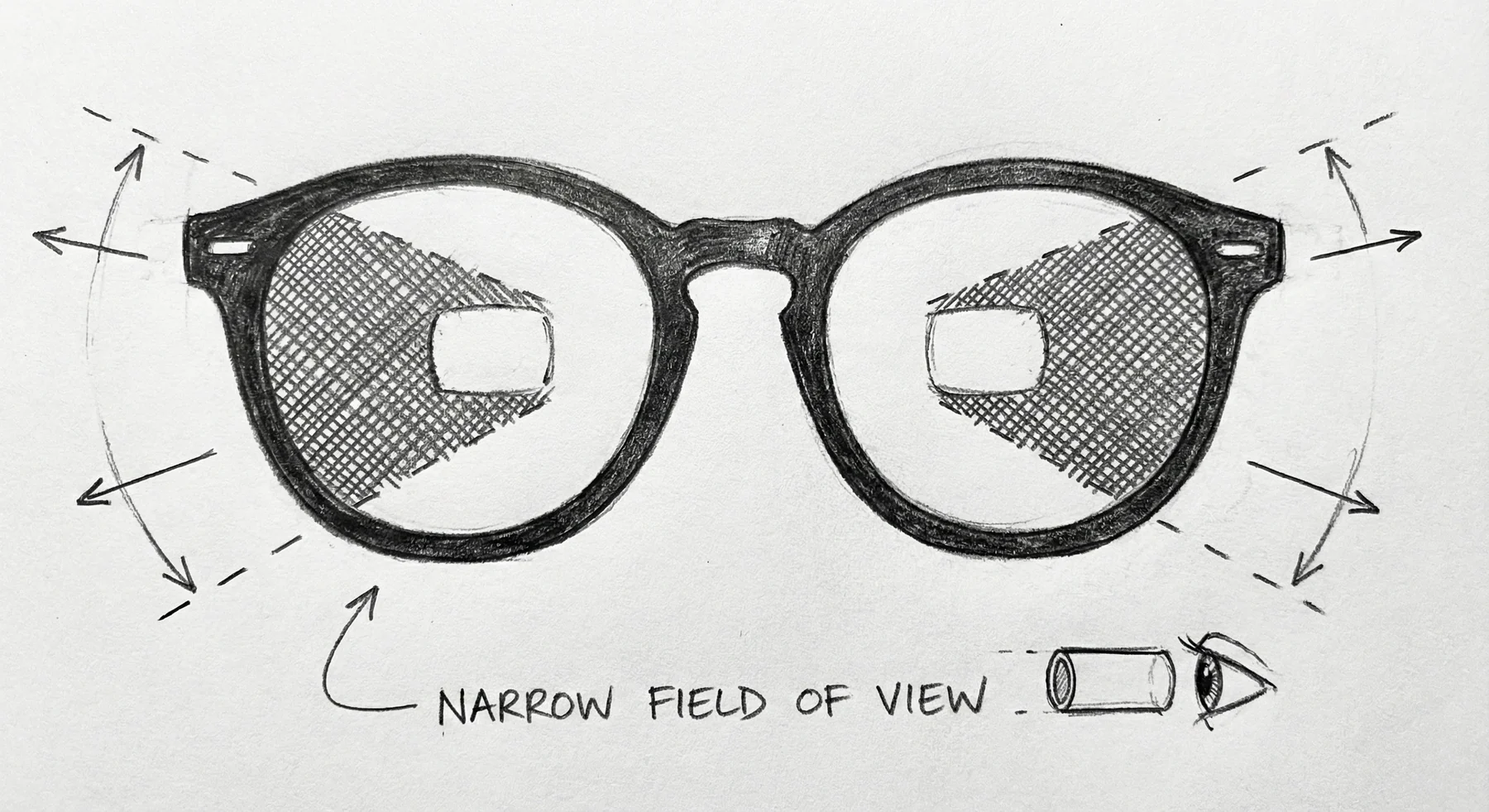
The decision filter
Prototype development
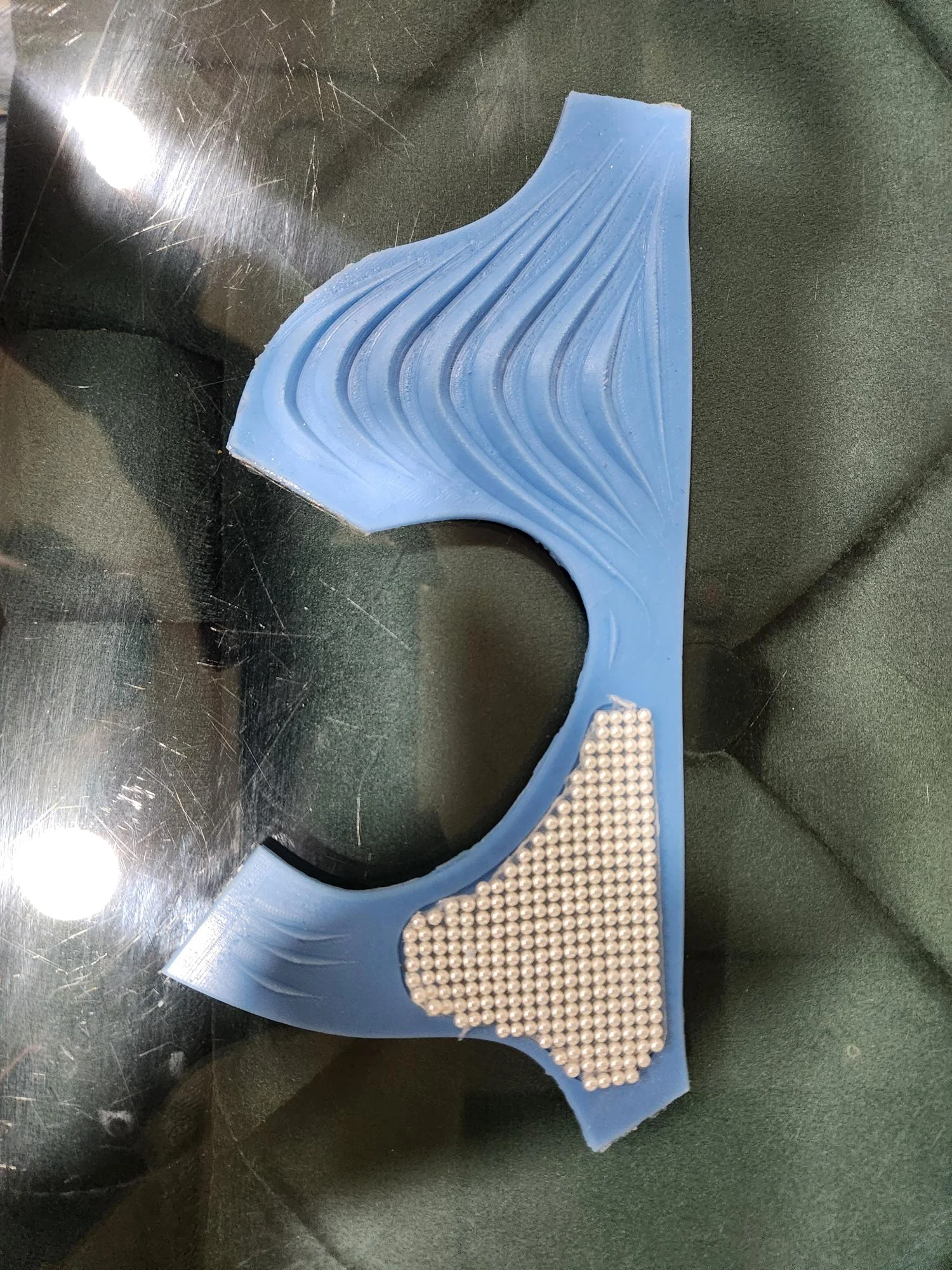
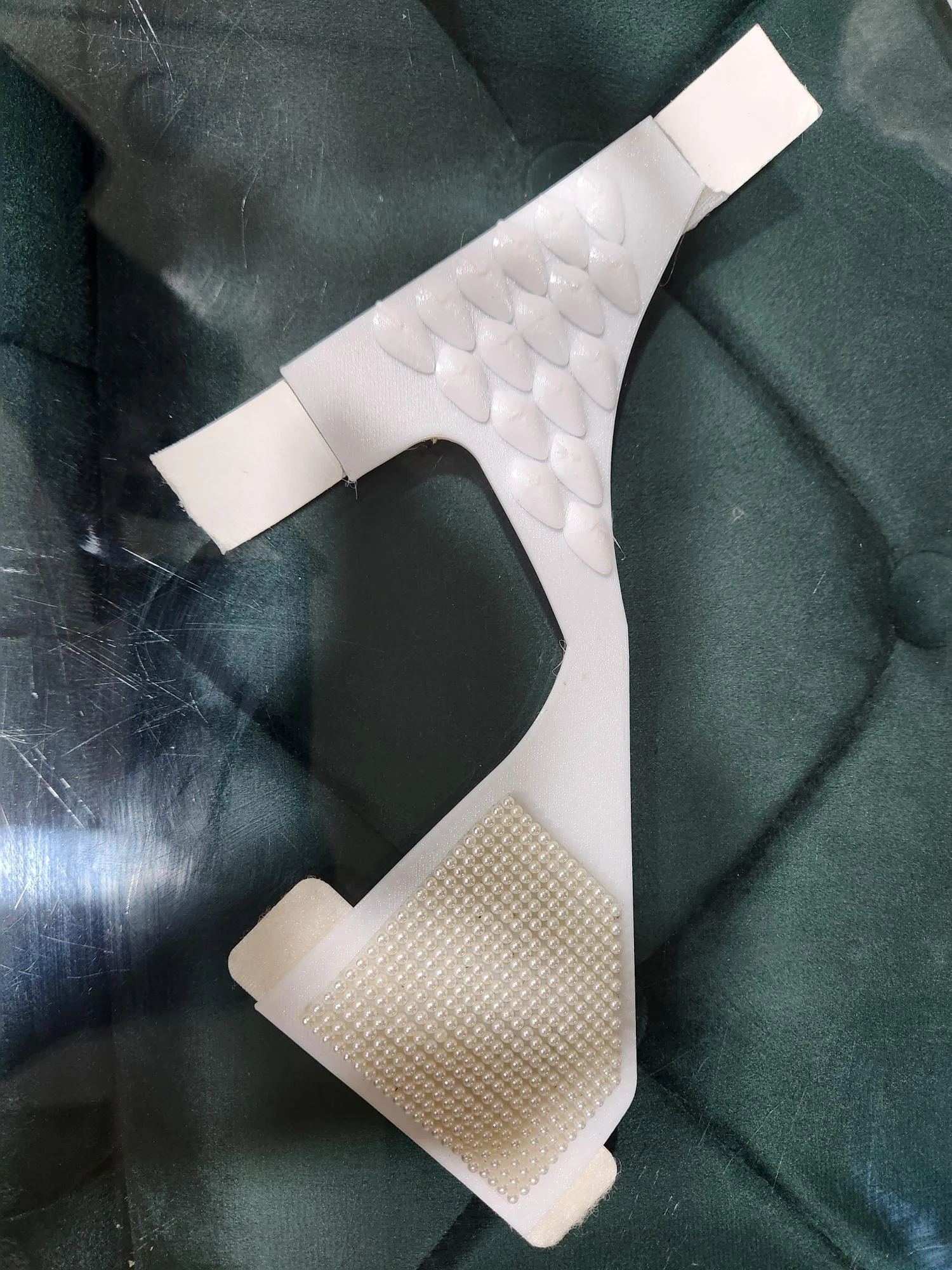
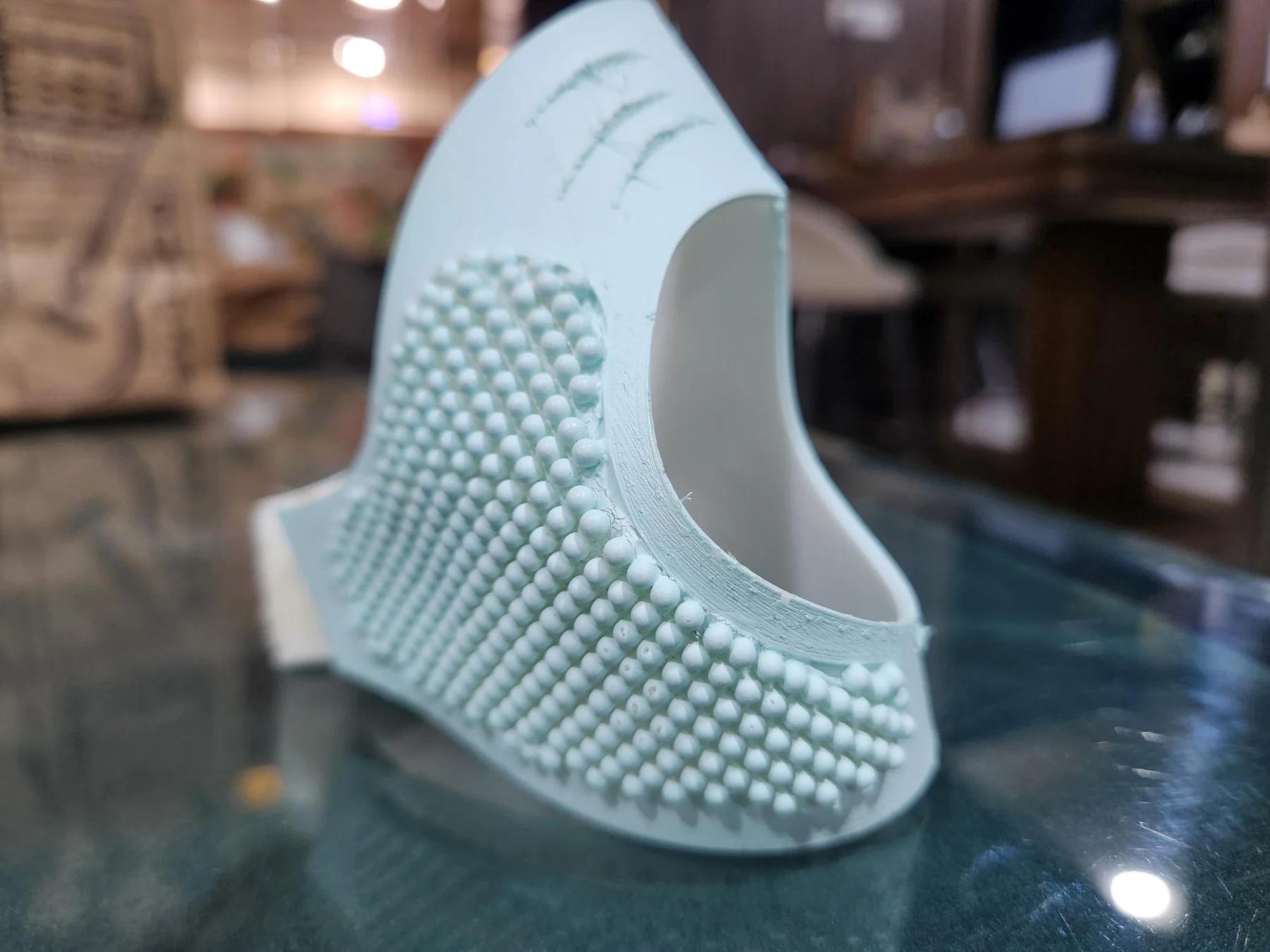
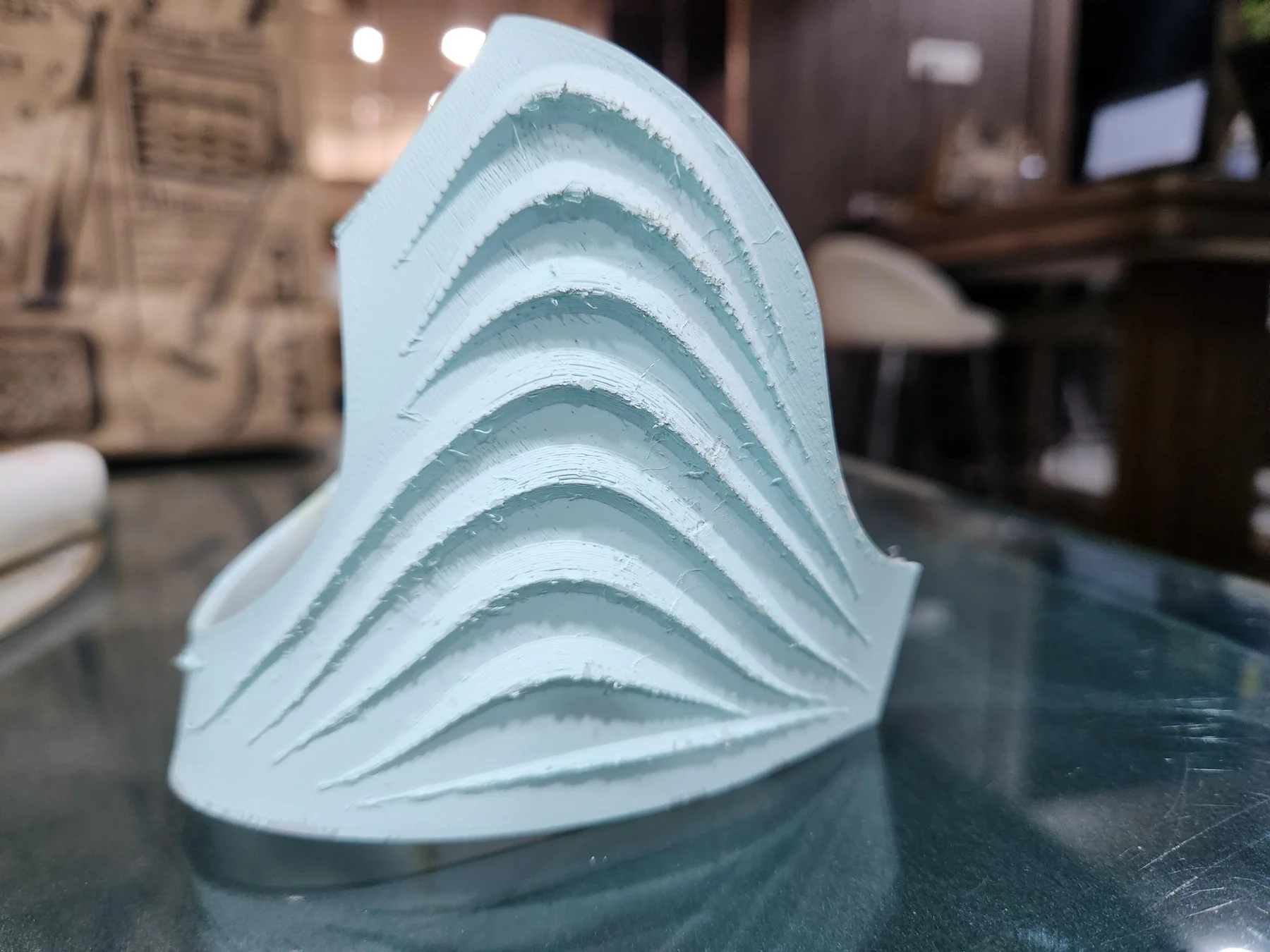
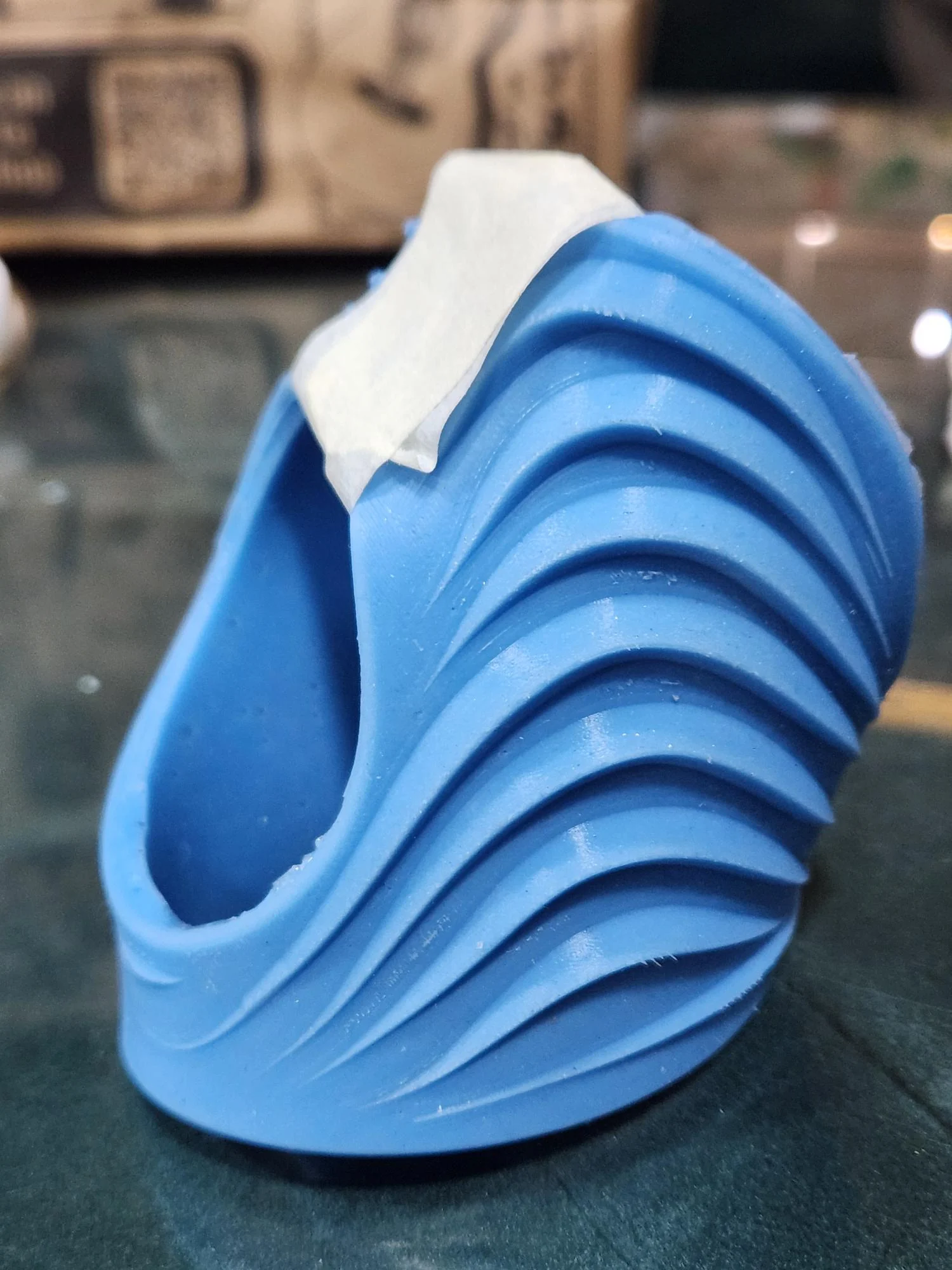
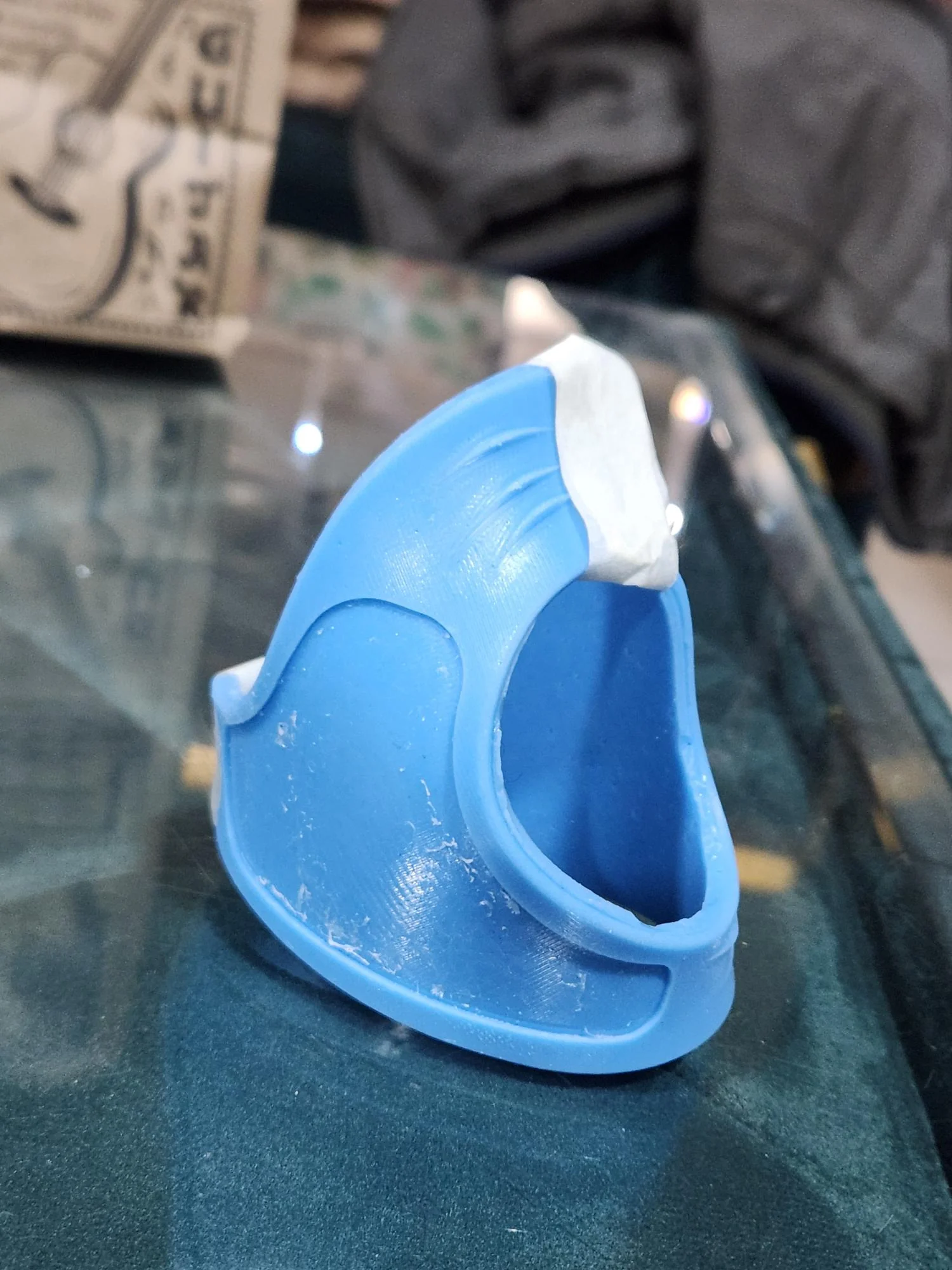
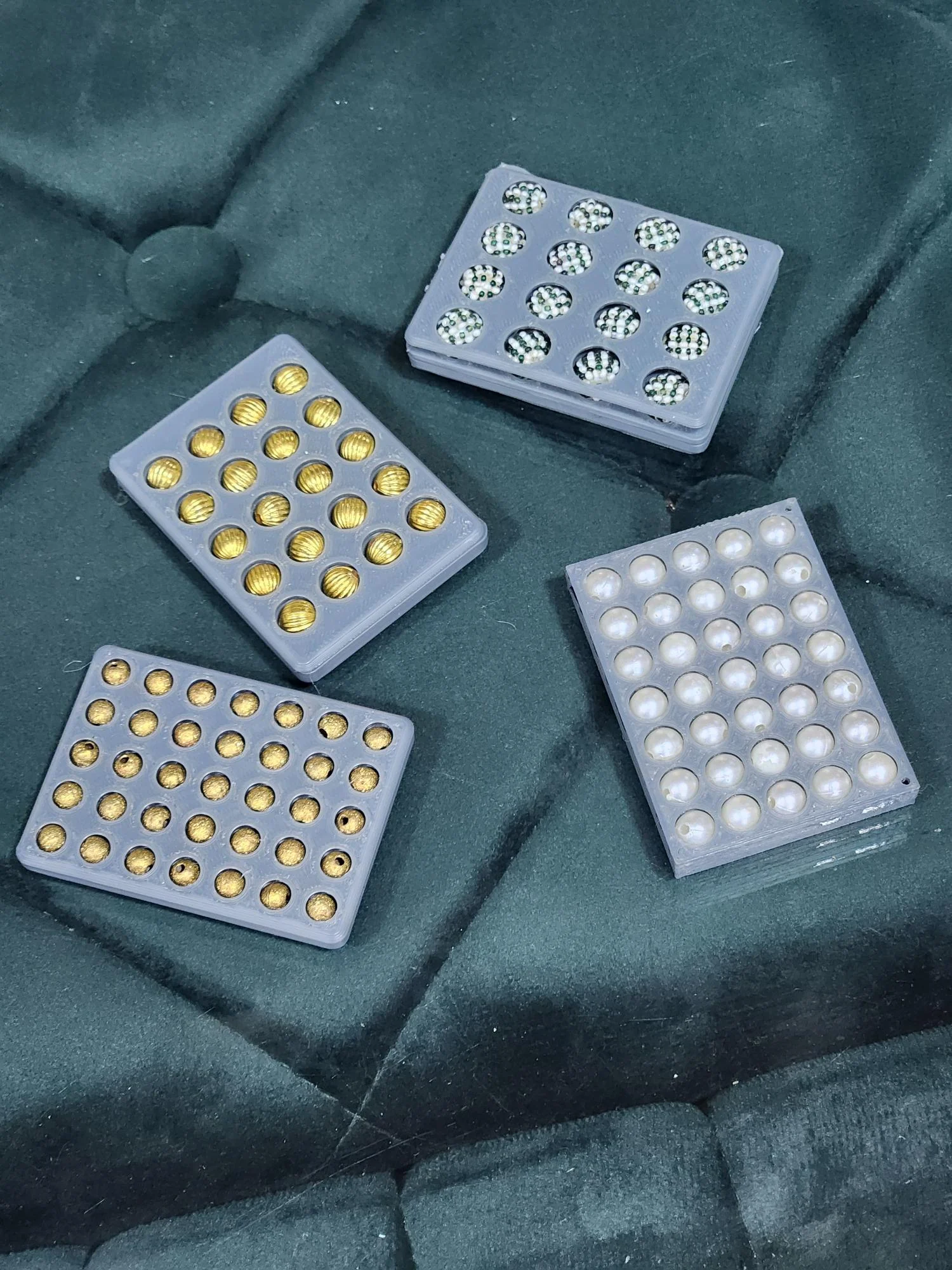
Flat studies became wrapped forms. Ridges were softened, openings were enlarged and the palm surface was tested through several rolling modules. Each prototype moved the concept closer to something the hand could naturally live with.
A vocabulary of texture
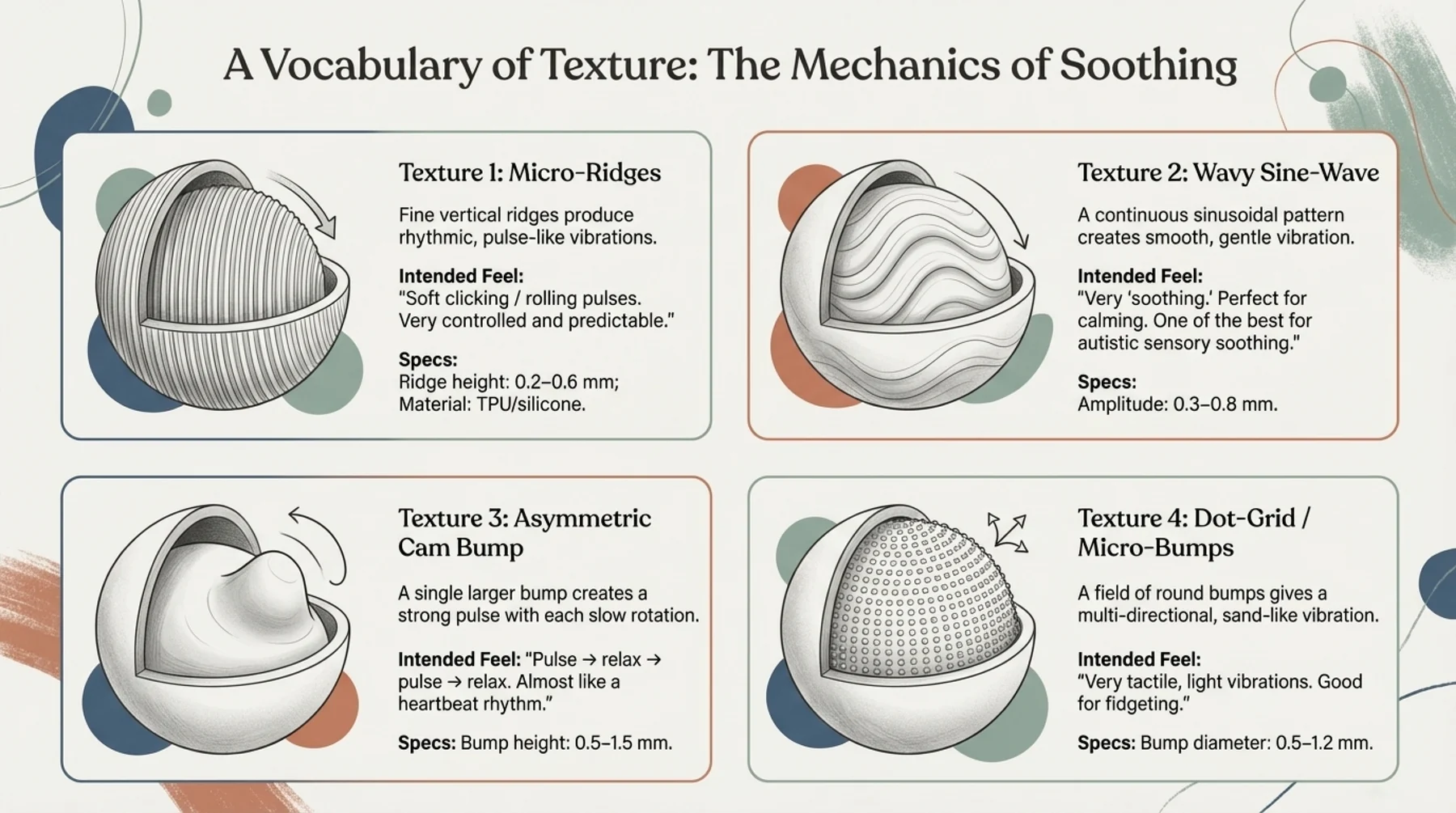
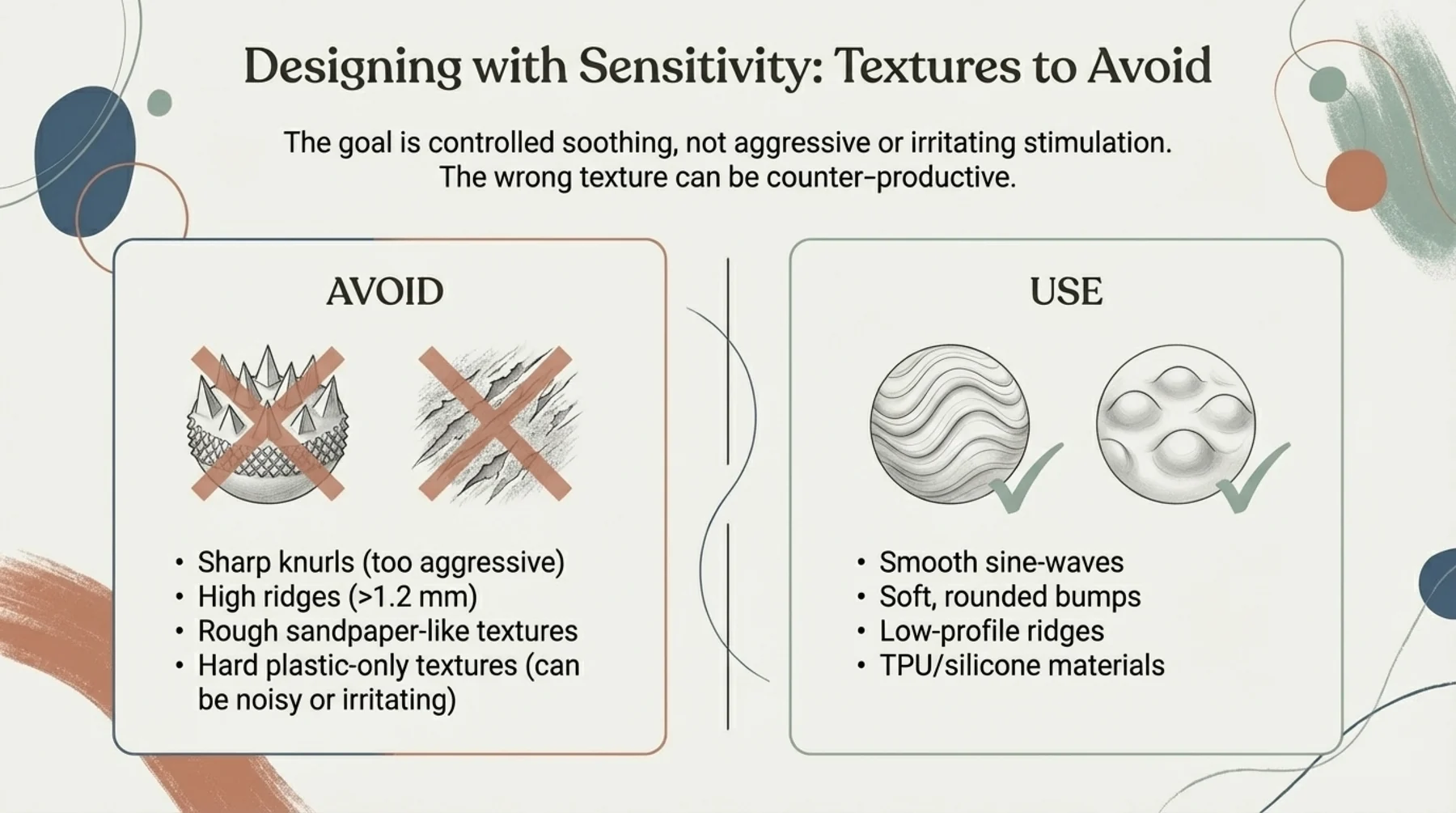
Texture was treated as an interaction, not decoration. The studies compared how micro-ridges, sine waves, asymmetric bumps and dot grids could create different rhythms as the palm modules rolled together.
The material rule
Sharp knurls, high ridges and rough plastic-only surfaces risk becoming another source of irritation. The final direction favoured soft TPU or silicone, rounded transitions and predictable resistance.
03 / Product
Introducing Aura
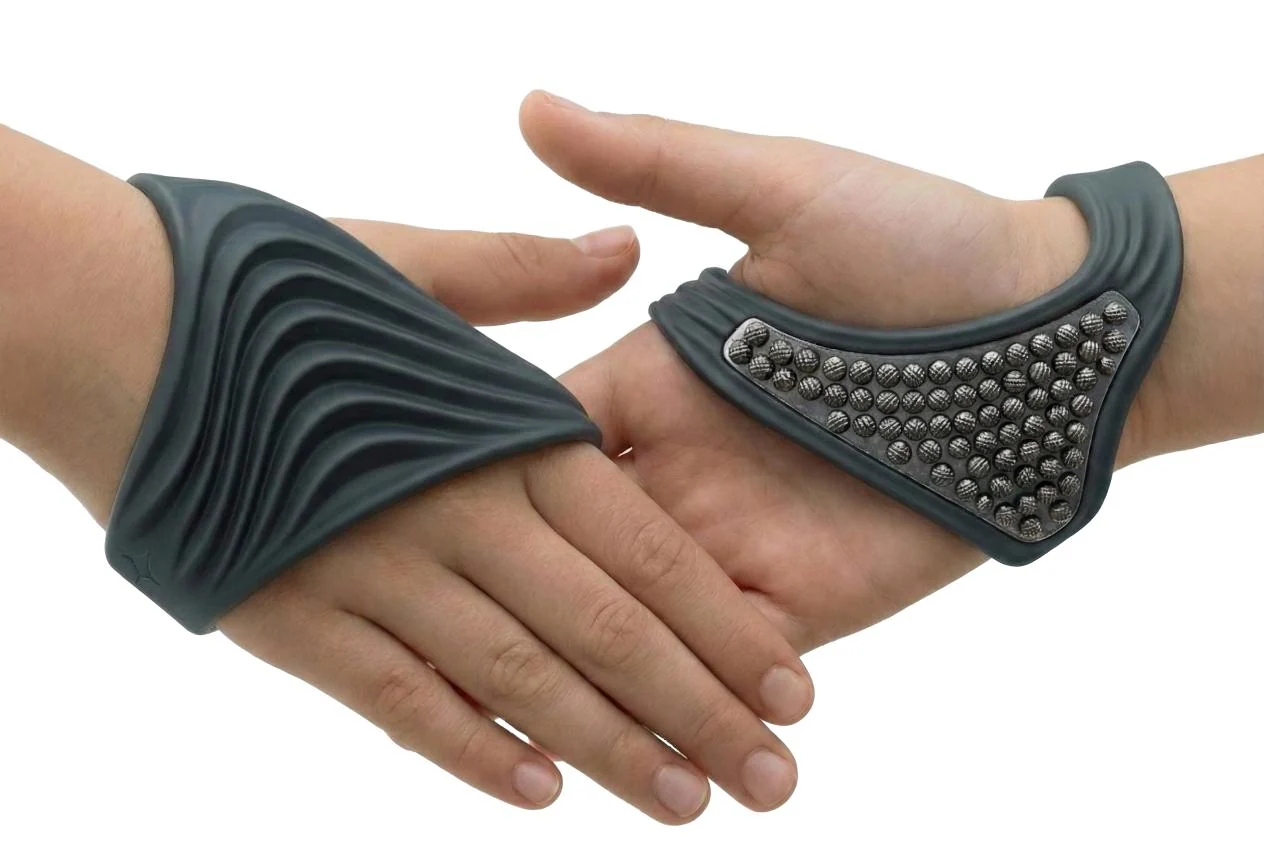
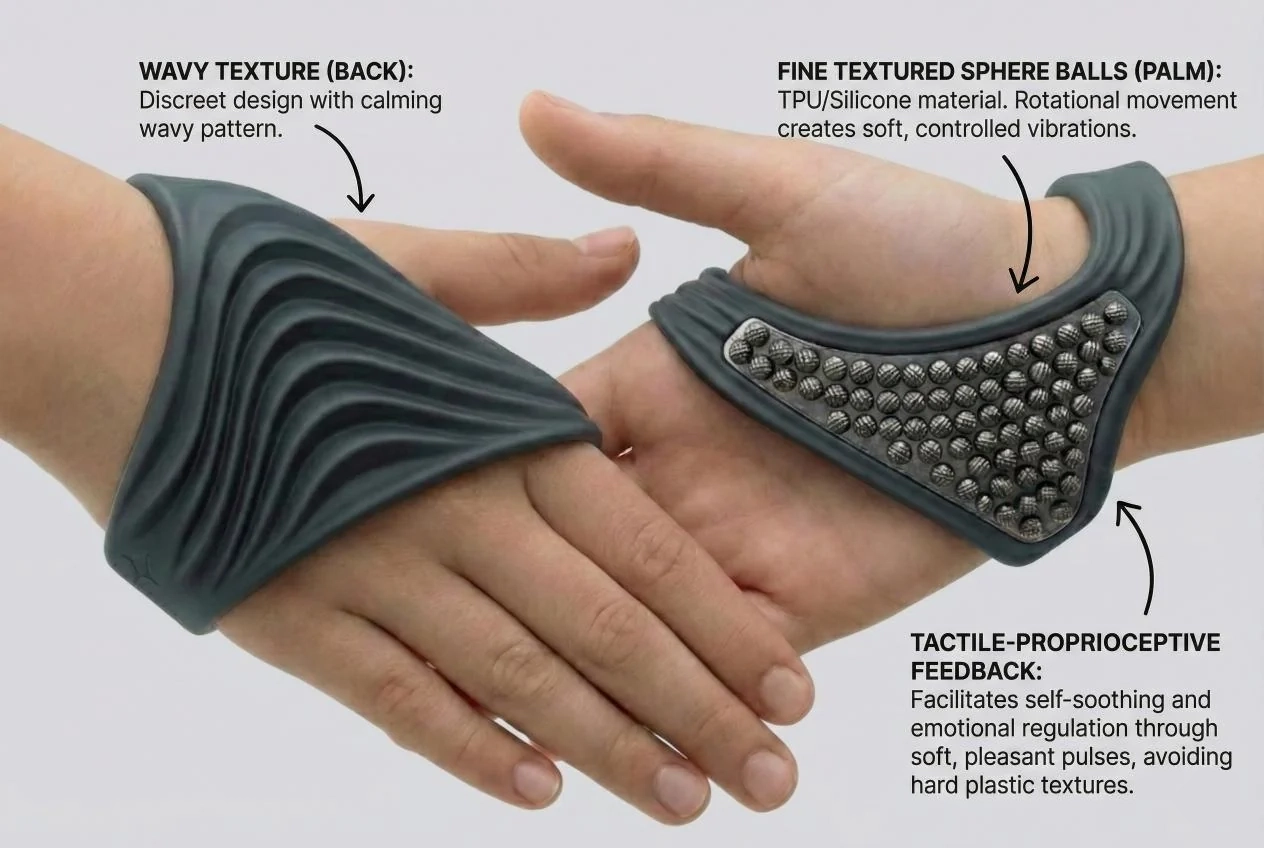
Aura is worn across the palm and back of the hand, leaving the fingers free. It places two distinct tactile languages exactly where the opposite hand can find them.
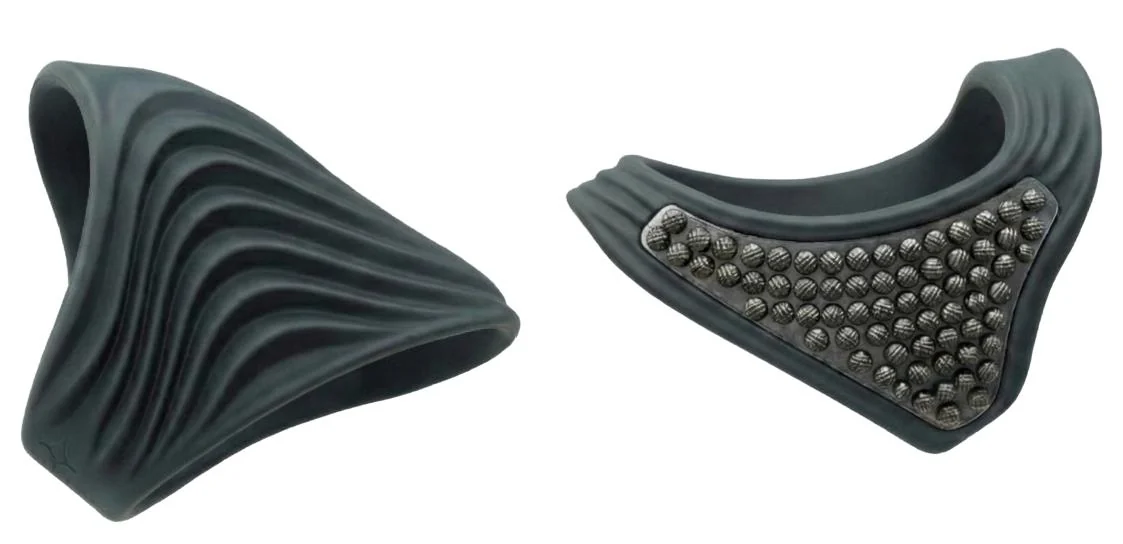
A quiet, discreet surface with broad flowing ridges for rubbing, tracing and pressure.
Rubbing both palms together rolls multiple textured spheres, translating a familiar hand motion into soft tactile pulses.
The fingerless geometry keeps grip and hand movement available for everyday use.
How the interaction works
Rubbing both palms together rolls multiple textured spheres across Aura's palm surface. Most of the spheres move in a shared rhythm, creating a soft field of repeated tactile pulses that the user can initiate and control.
A rhythm you control.
In the environment it was designed for
“The product does not ask the world to become quiet. It gives the hand a quiet language of its own.”
04 / Reflection
What this project changed for me
Aura became more than a product-form exercise. It asked how a sensory tool can feel personal rather than medical, visible without feeling exposing, and supportive without deciding for the person using it.
The most important outcome is not the glove alone. It is the principle behind it: design can create a small pocket of control inside an environment that cannot be controlled.

Aura is an academic design concept for sensory self-regulation. It is not presented as a medical device, therapy or universal solution; sensory preferences and support needs differ from person to person.