Pressure, texture and movement need to be explored with the individual—not prescribed as one universal setting.
Sensory-tool redesign / Third-semester project 01
GooGlitter
A sensory pad
learned to move.
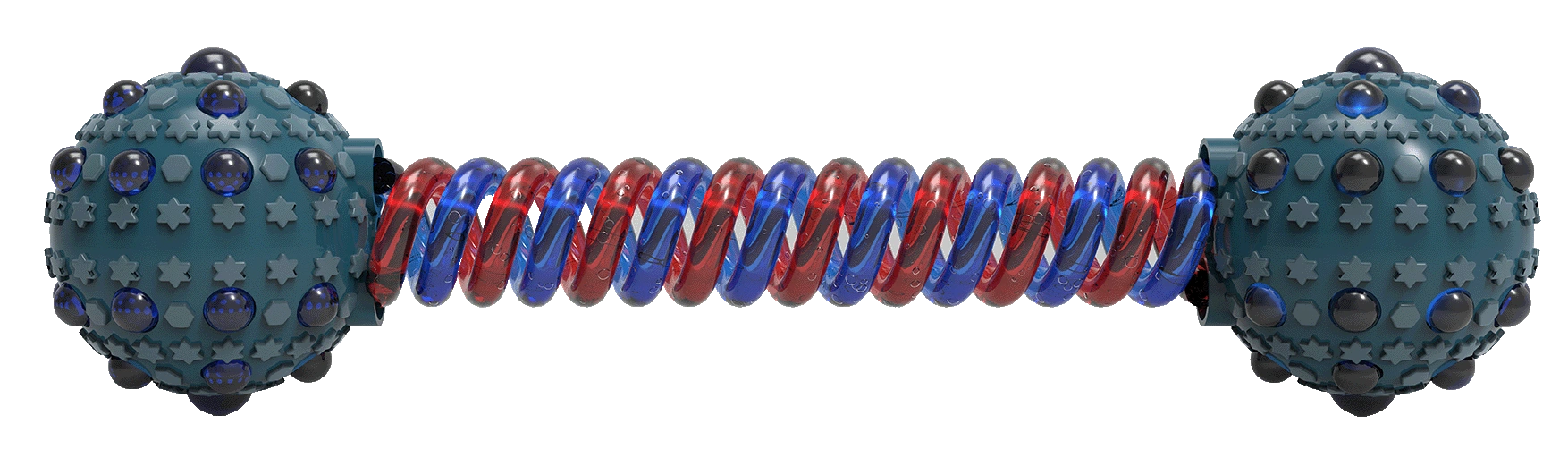
An existing glitter-filled fidget pad reimagined as a tactile, squeezable dumbbell form—bringing texture, movement and fluid visual feedback into one handheld object.
Follow the transformation00 / The brief
Redevelop an existing sensory-development tool
Keep the fascination.
Change the relationship.
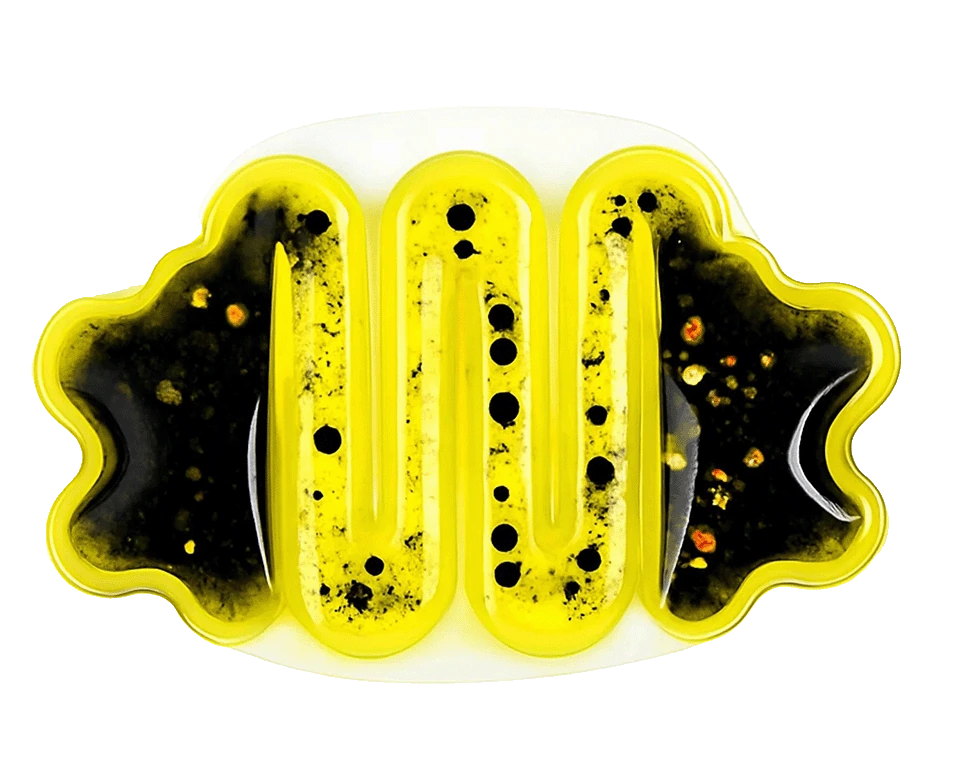
The original Goo Glitter is a compact, fluid-filled pad. Its slow glitter movement offers a visual point of focus, while the soft body can be pressed and handled. The project asked how that familiar appeal could become a richer three-dimensional interaction.
2D3D
From watching and pressing one surface to gripping, squeezing, twisting and pulling an object.
The opportunity
How might we redesign a squishy pad for a richer tactile experience?
01 / Learning before making
A shared map of sensory processing
One brain area
inside a larger study.
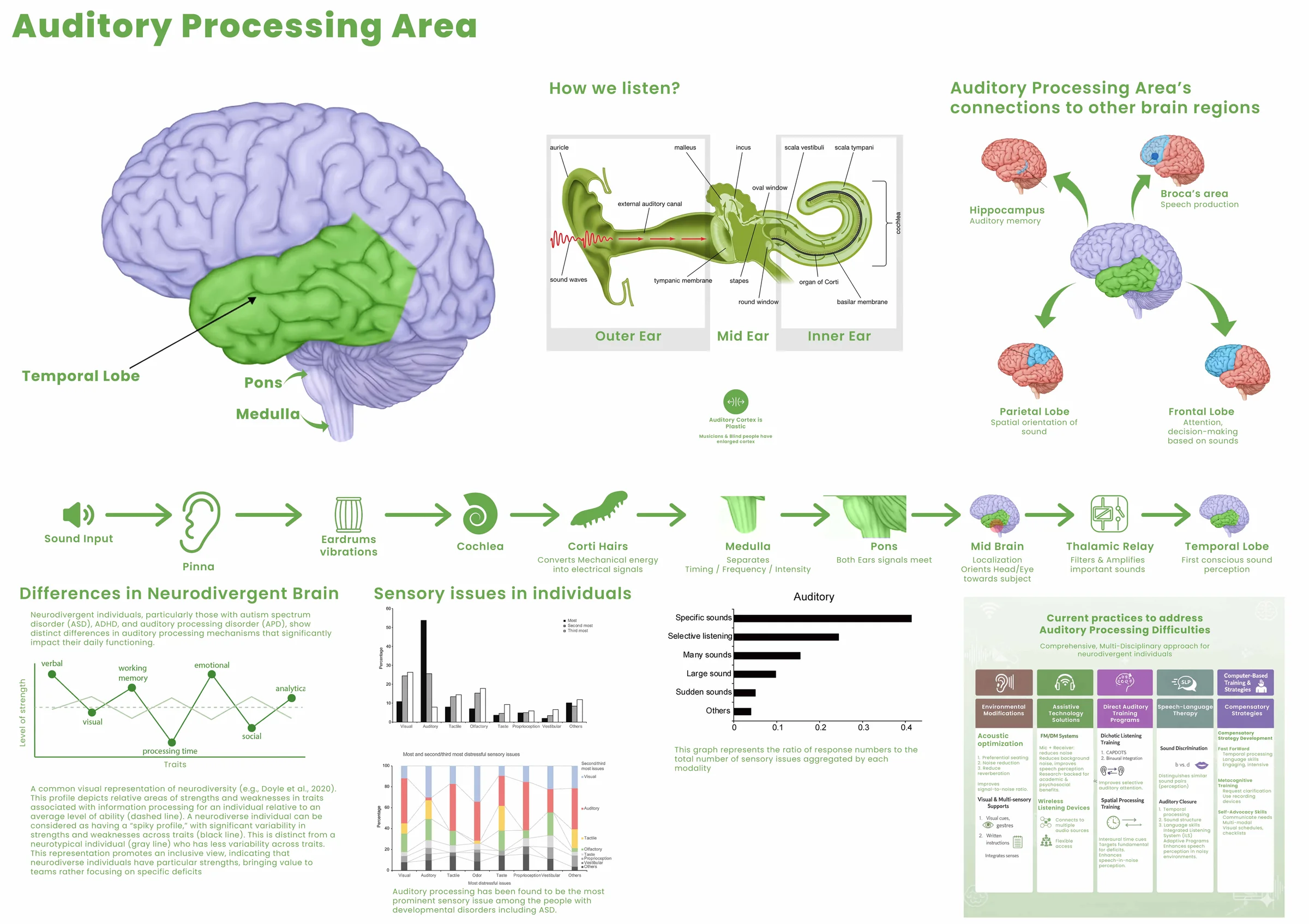
As a class, we divided the brain into areas and researched them in depth, then taught our findings to one another. My assigned topic was auditory processing. It was one contribution to a wider shared understanding—not the design brief by itself.
Conversations with occupational therapists and parents
Useful products begin with a specific sensory need.
The discussion resisted easy generalisation. Sensory preferences differ between people, environments and moments; what supports one person may irritate another.
Touching, moving and experimenting can become a meaningful way to engage with an object and the body.
Sensory objects may be squeezed, pulled or chewed. Durability and secure construction matter as much as visual appeal.
These conversations informed the design direction; they do not make Goo Glitter a therapeutic or universally suitable product.
02 / Translating insight
Three moves shaped the redesign
Hold.
Flow.
Move.
The redesign kept the original product's slow visual feedback, then gave the hand more ways to create it.
Textured spheres
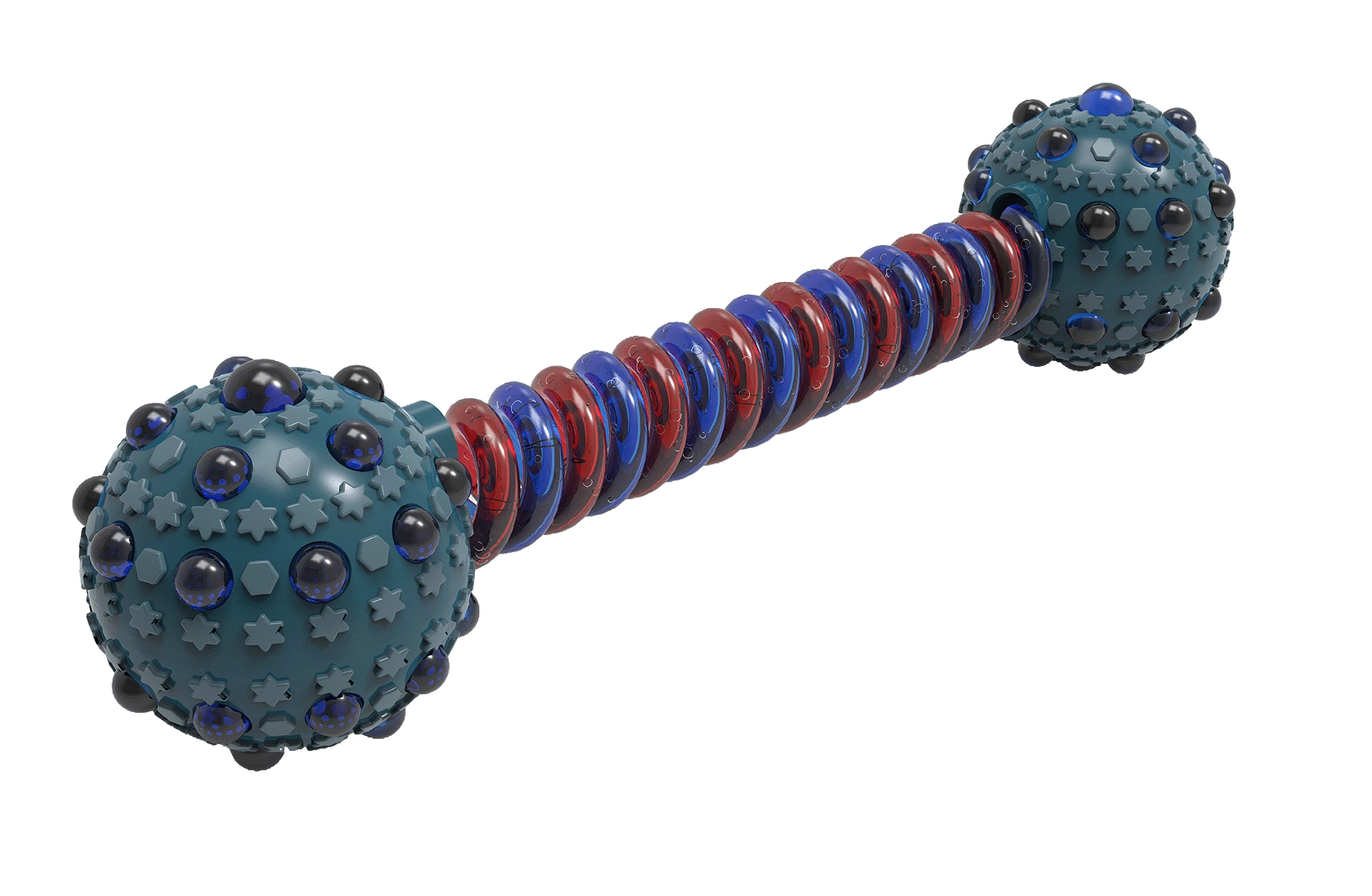
Two rounded grips distribute stars, hexagons and jewel-like bumps across the hand.
Visible liquid
Squeezing a soft bladder pushes glittered liquid through transparent helical paths.
More than one gesture
The dumbbell form invites squeezing, twisting, pulling and repeated bilateral movement.

03 / The product
Introducing the redesigned Goo Glitter
An object that responds to the hand.
The final form joins two soft textured spheres with transparent red-and-blue helical tubes. Action at either end creates visible movement through the centre.
How the interaction works
Pressure becomes movement.
- 01Squeeze
Compressing either silicone bladder displaces the internal goo.
- 02Travel
Glitter moves slowly through the clear red-and-blue helical tubes.
- 03Release
The bladder expands back, giving the hand an immediate physical response.
Ready in the hand.
Proposed material system
Soft where it meets the hand. Secure where it holds the liquid.
Outer shell
Overmoulded thermoplastic elastomer for a soft, resilient grip.
Squeeze bladder
Medical-grade silicone proposed for stretch, recovery and durability.
Helical tubes
Transparent medical-grade silicone to keep the moving liquid visible.
Goo liquid
Glycerine and propylene glycol with food-grade glitter and pigments.
Sealed joints
Ultrasonically welded connections proposed to reduce leak risk.
Sensory feedback profile
One object.
Four kinds of invitation.
Tactile
Rounded bumps and repeated motifs create varied contact across the palm and fingers.
Visual
Glitter and coloured coils make cause and effect visible at a slow, readable pace.
Repetitive
Squeeze, twist and pull can be repeated in a rhythm chosen by the user.
Physical
The double-ended form allows a larger movement than a flat, single-hand pad.
Product communication
Making sensory design feel vivid—not clinical.
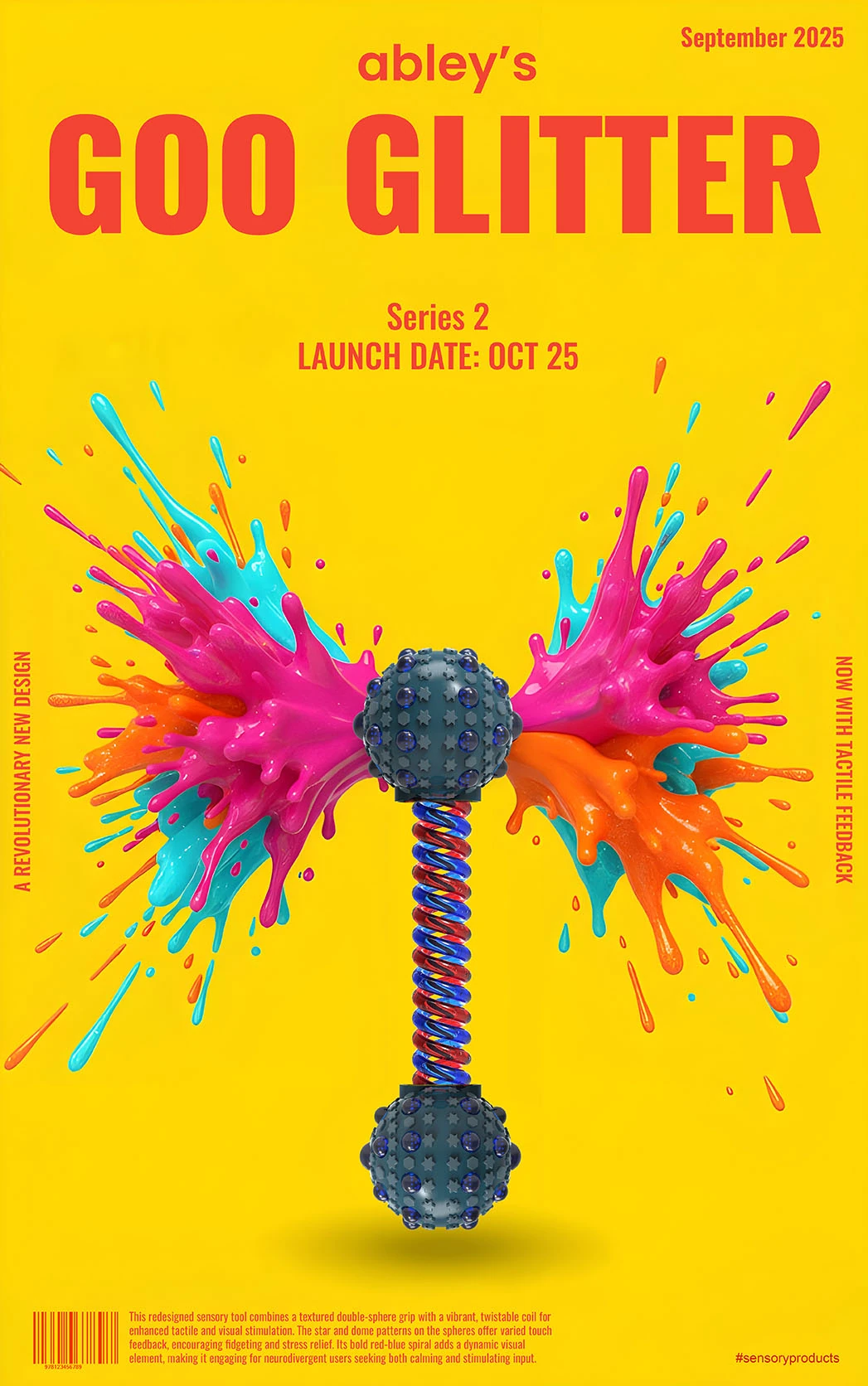
The launch poster frames the product as energetic and desirable. Saturated colour and liquid splashes echo the visual reward inside the object, while the large central render keeps the redesigned form unmistakable.
- Format
- Product launch poster
- Identity
- Abley's / Goo Glitter Series 2
- Designer
- Bhavook Singh / ID 472
04 / What moved forward
The project before Aura
First, an object in the hand.
Next, support that stays with it.
Goo Glitter taught me to translate sensory principles into form: varied but rounded texture, visible cause and effect, repeated movement, and an interaction the user can initiate.
It also revealed the limitation of a separate handheld object. In the next project, Aura, the question shifted from “How can the object respond?” to “How can support remain discreetly available in everyday public space?”
- Project
- Third-semester Design Project 01
- Discipline
- Industrial Design
- Institution
- School of Planning and Architecture, New Delhi
- Scope
- Research, redesign, form, interaction, material proposal and visual communication
Goo Glitter is an academic sensory-tool concept, not a medical device or a universal solution. Sensory preferences and support needs differ from person to person; any real product would require material, safety, leakage and user testing.
Continue through the portfolio / Project 04
Doodle Den
From sensory interaction to an organized stationery system.